Seven materials
How each one behaves
Including the parts that look like faults and are not. If you know before you buy that brass darkens and travertine stains, neither will be a disappointment later.
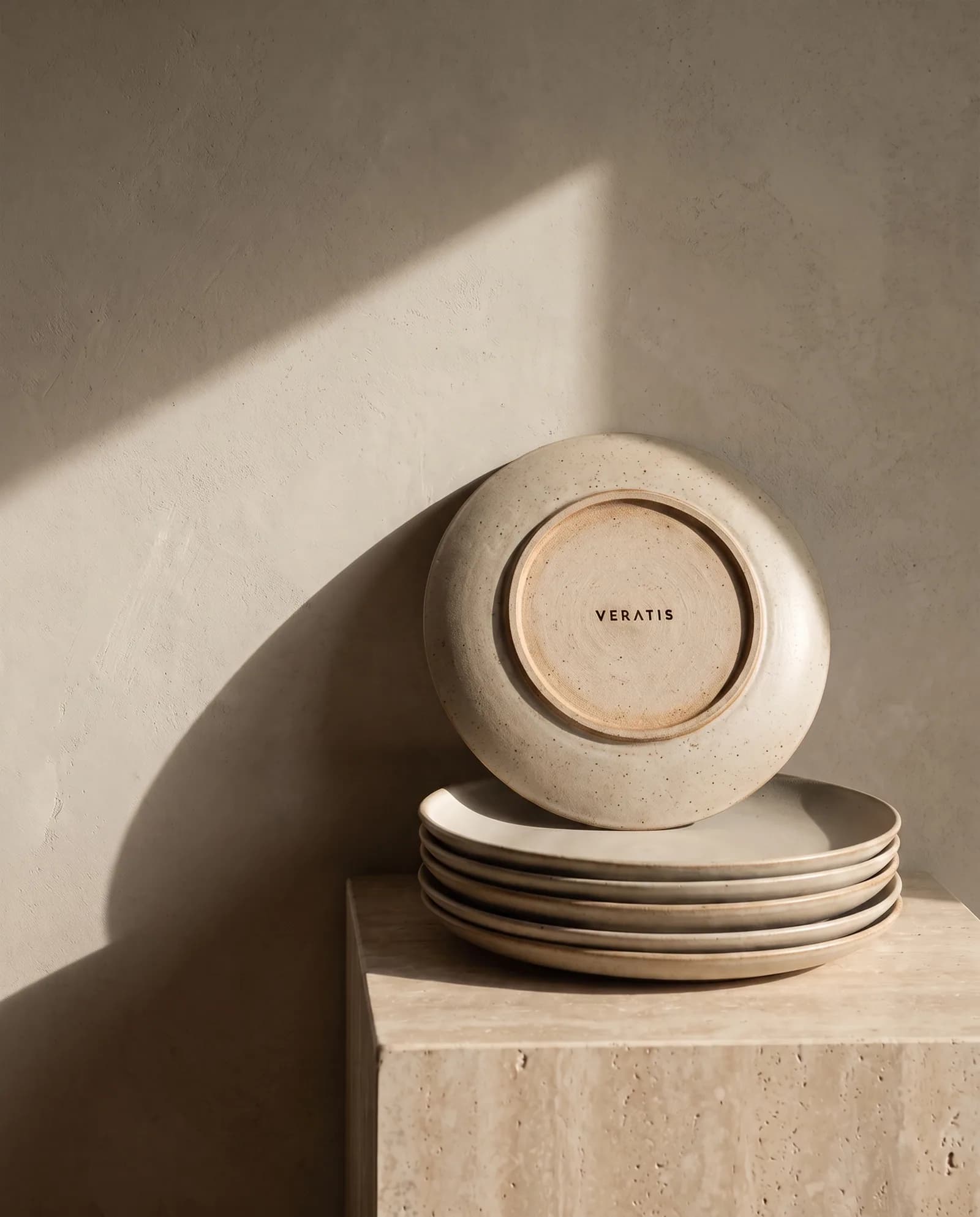
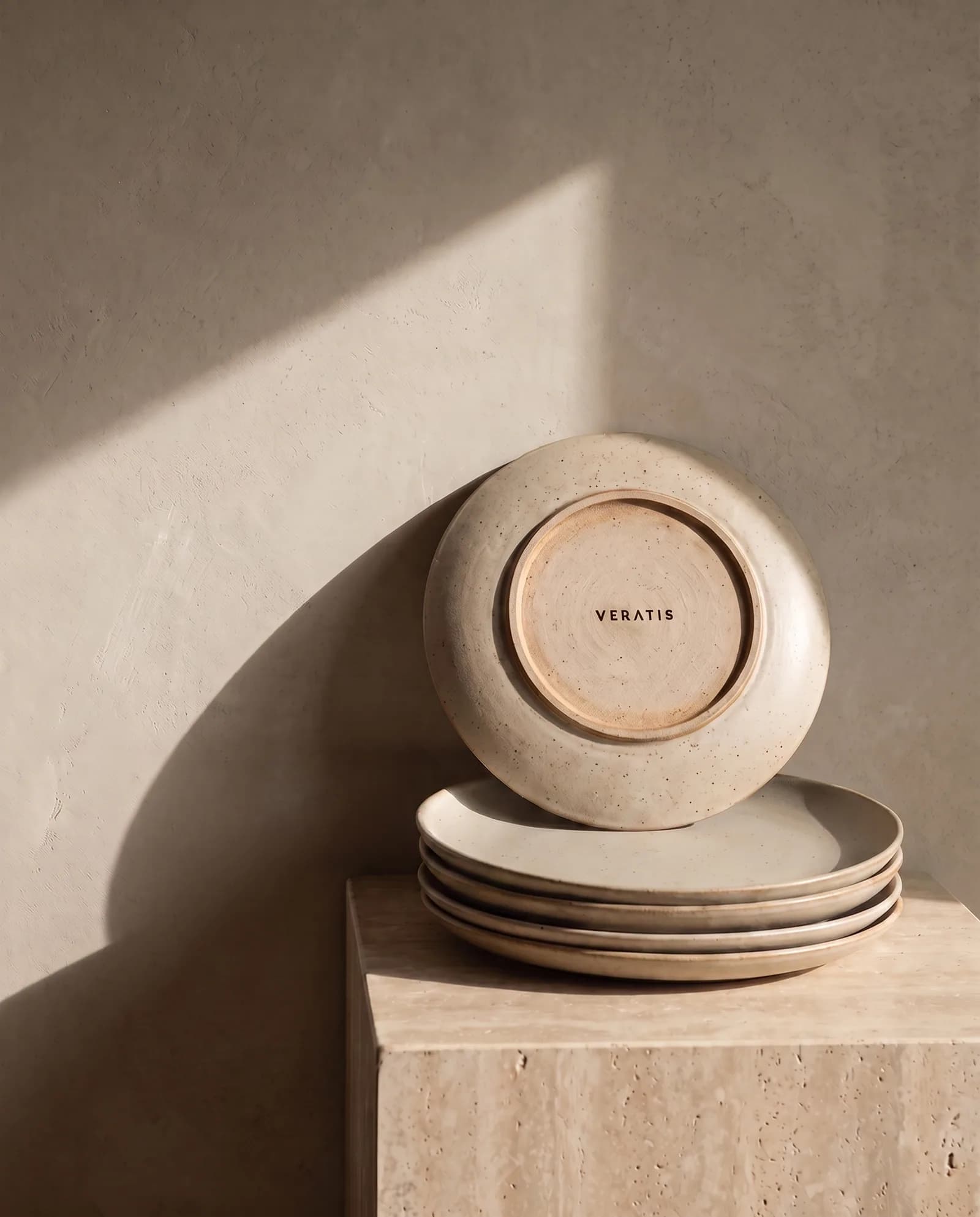
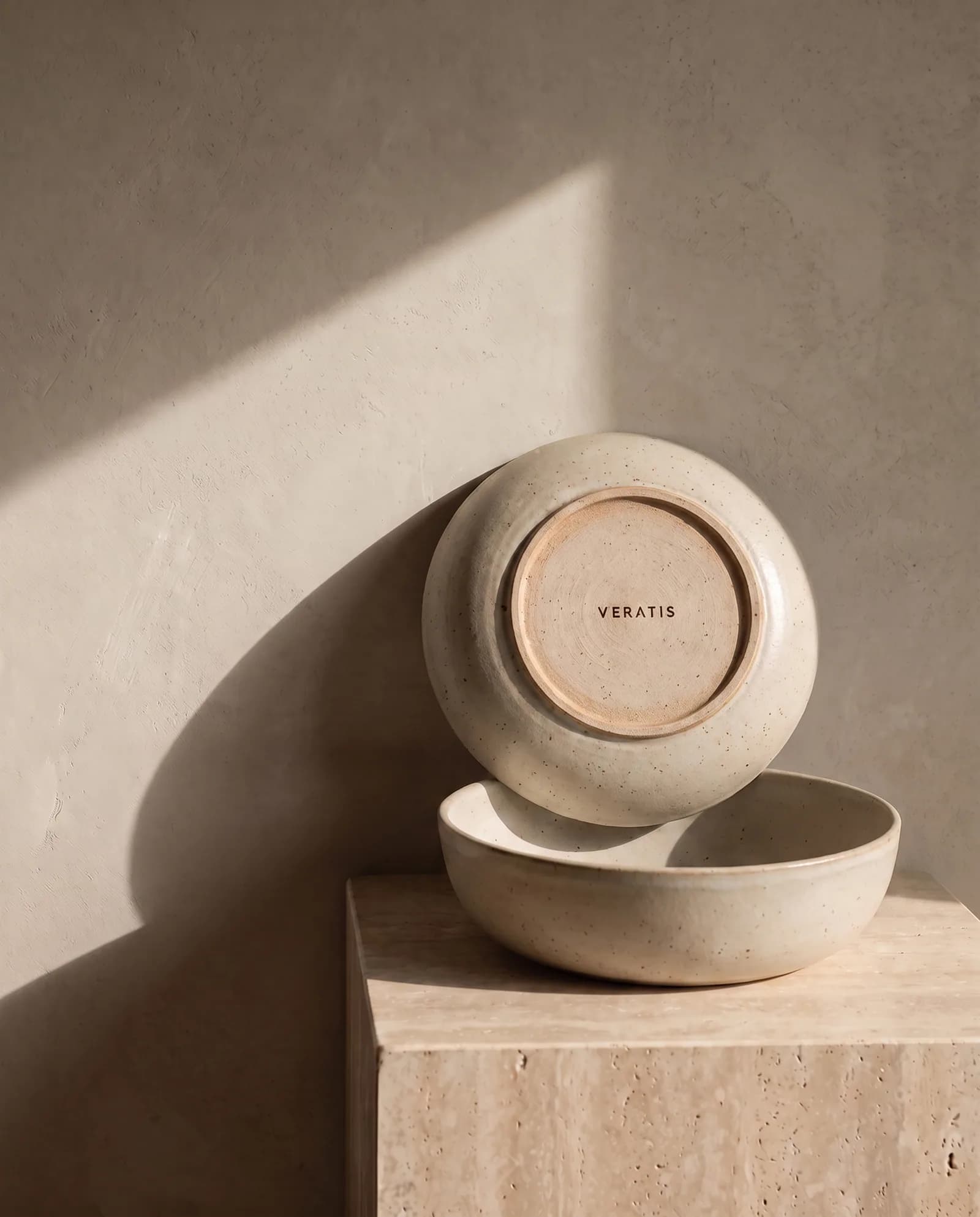
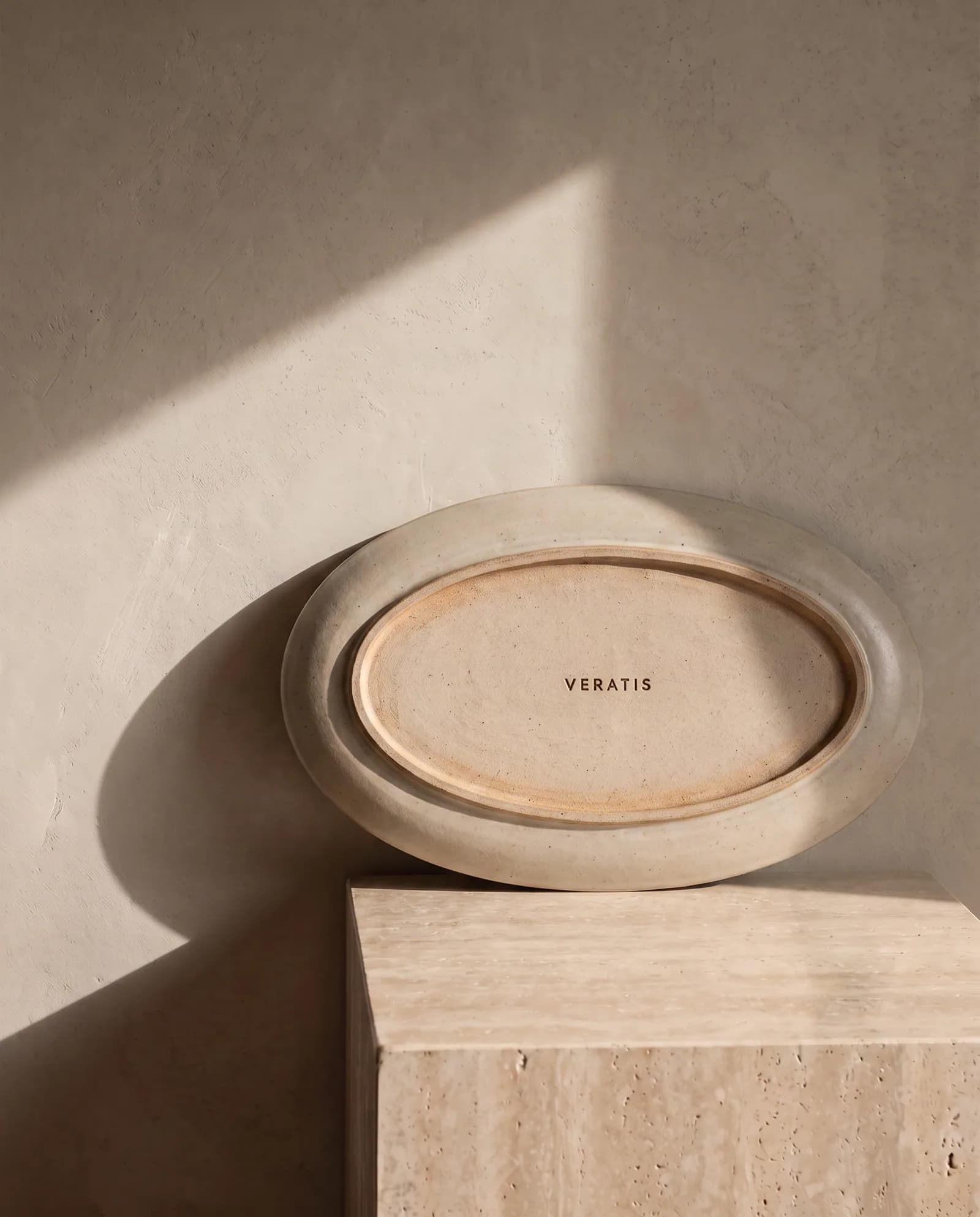
Stoneware
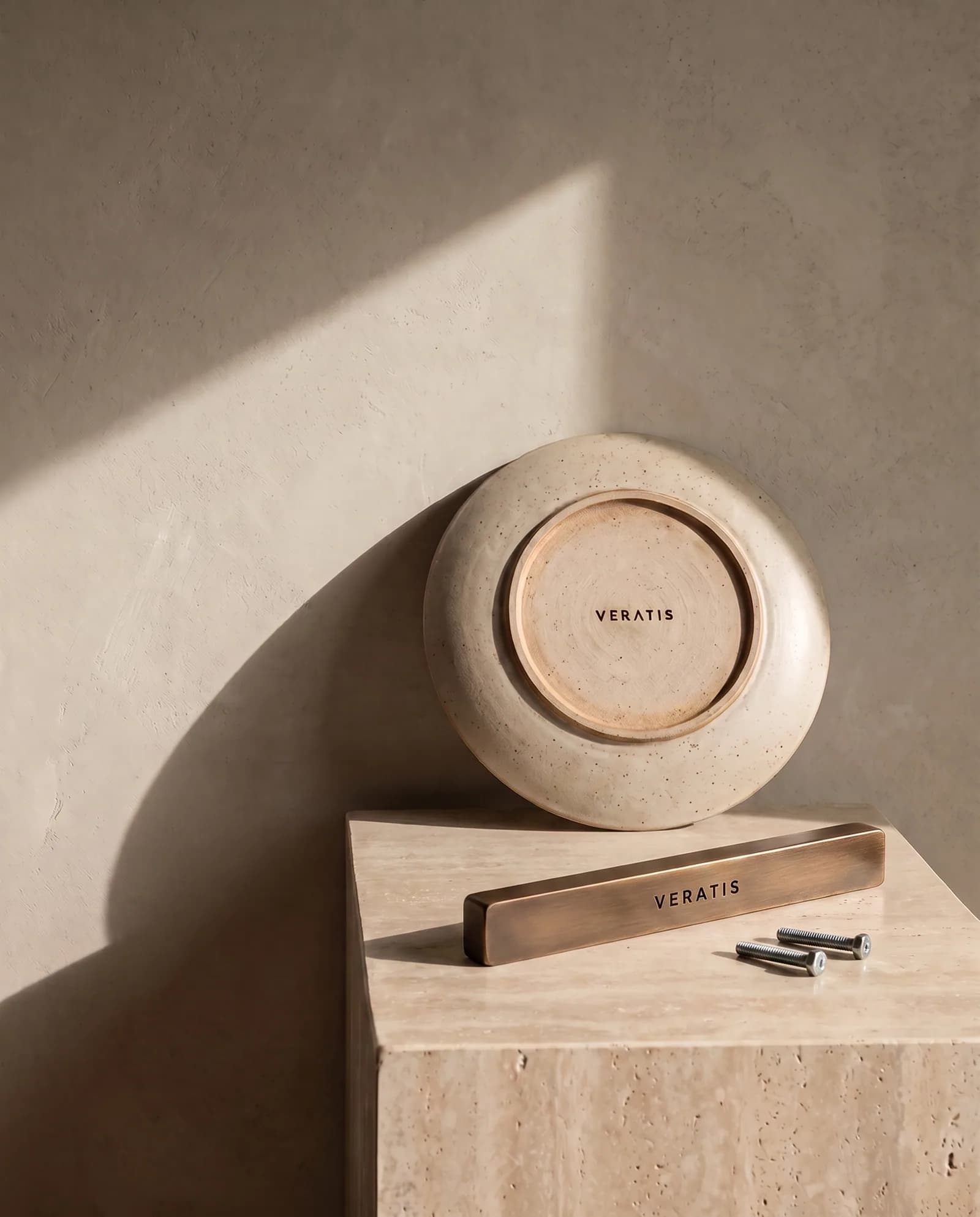
Fired to 1280°C, vitrified and non-porous. Chips rather than cracks, and holds heat far longer than porcelain.
What to expect
- Glaze tone varies between pieces. Across a set of four the variation is visible; on a single piece it is not.
- Small dark specks in the clay body are iron in the raw material coming through the glaze.
- The unglazed foot ring is deliberately left raw, and it is slightly abrasive.
How it ages
Essentially unchanged. Vitrified stoneware is non-porous, so it does not stain or absorb. It chips rather than crazing.
Care
- Dishwasher and microwave safe throughout the range.
- Never oven safe. Thermal shock cracks the body.
- Stack with a cloth between pieces if your table is polished — the foot ring can mark it.
10 pieces in stoneware
Glass
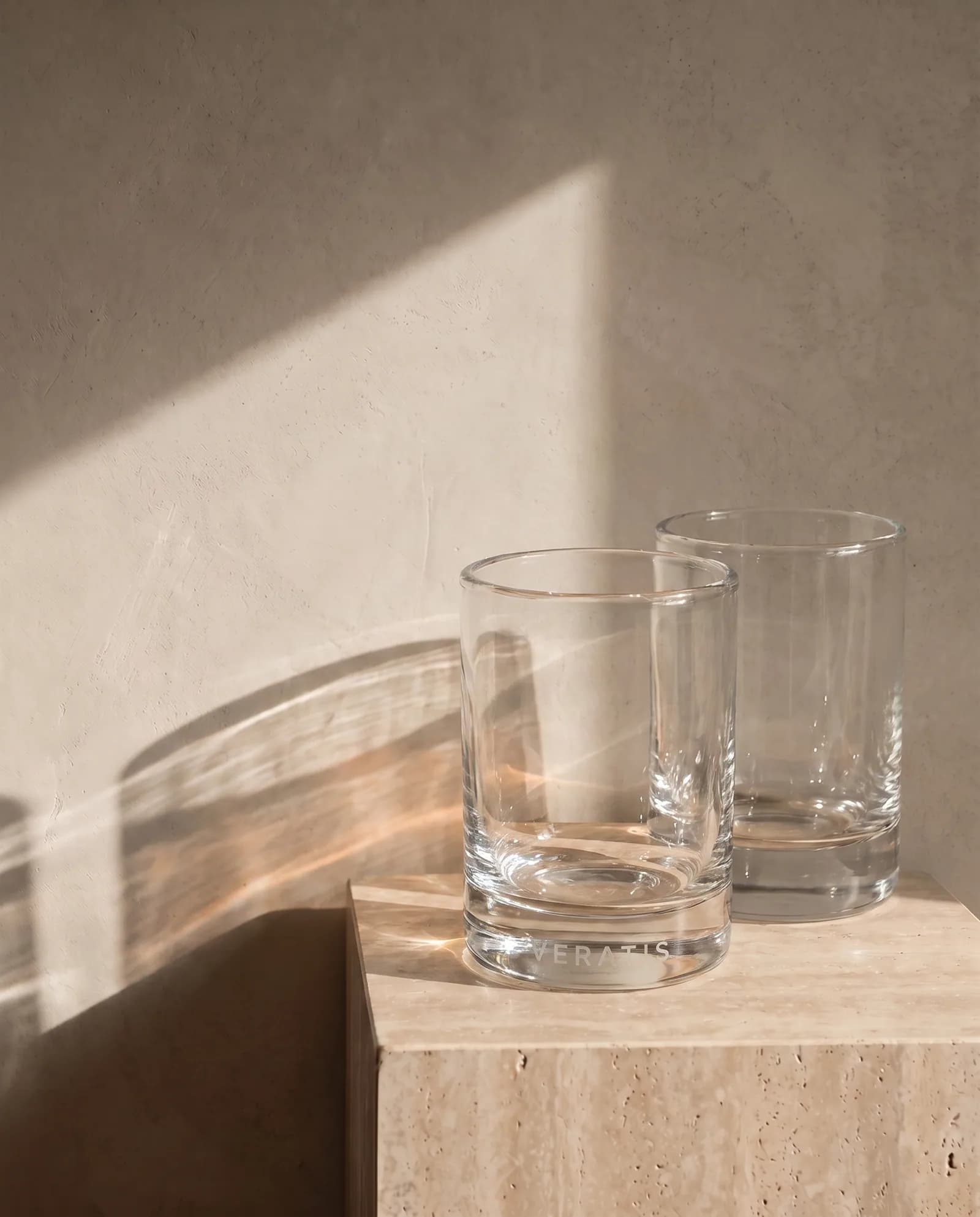
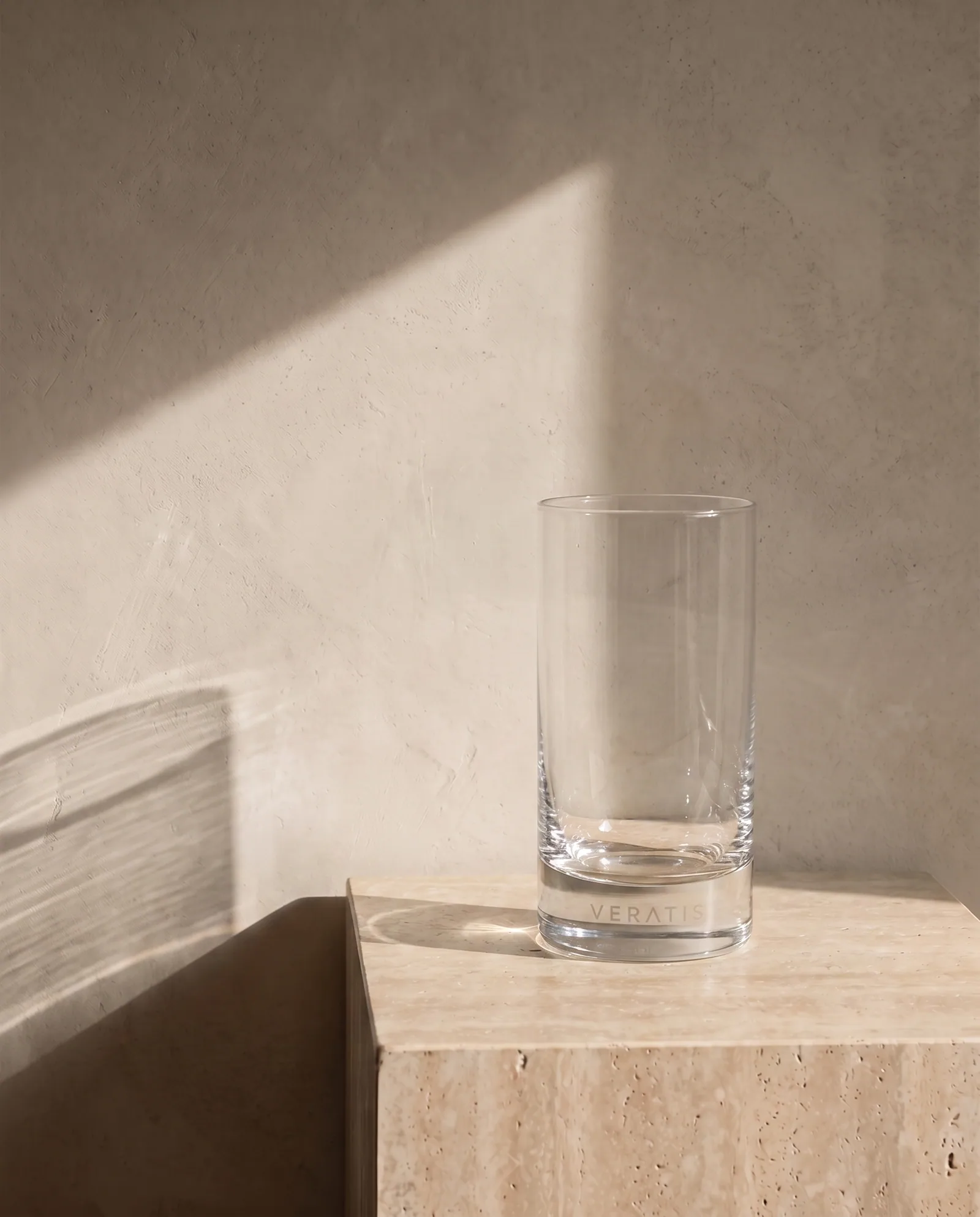
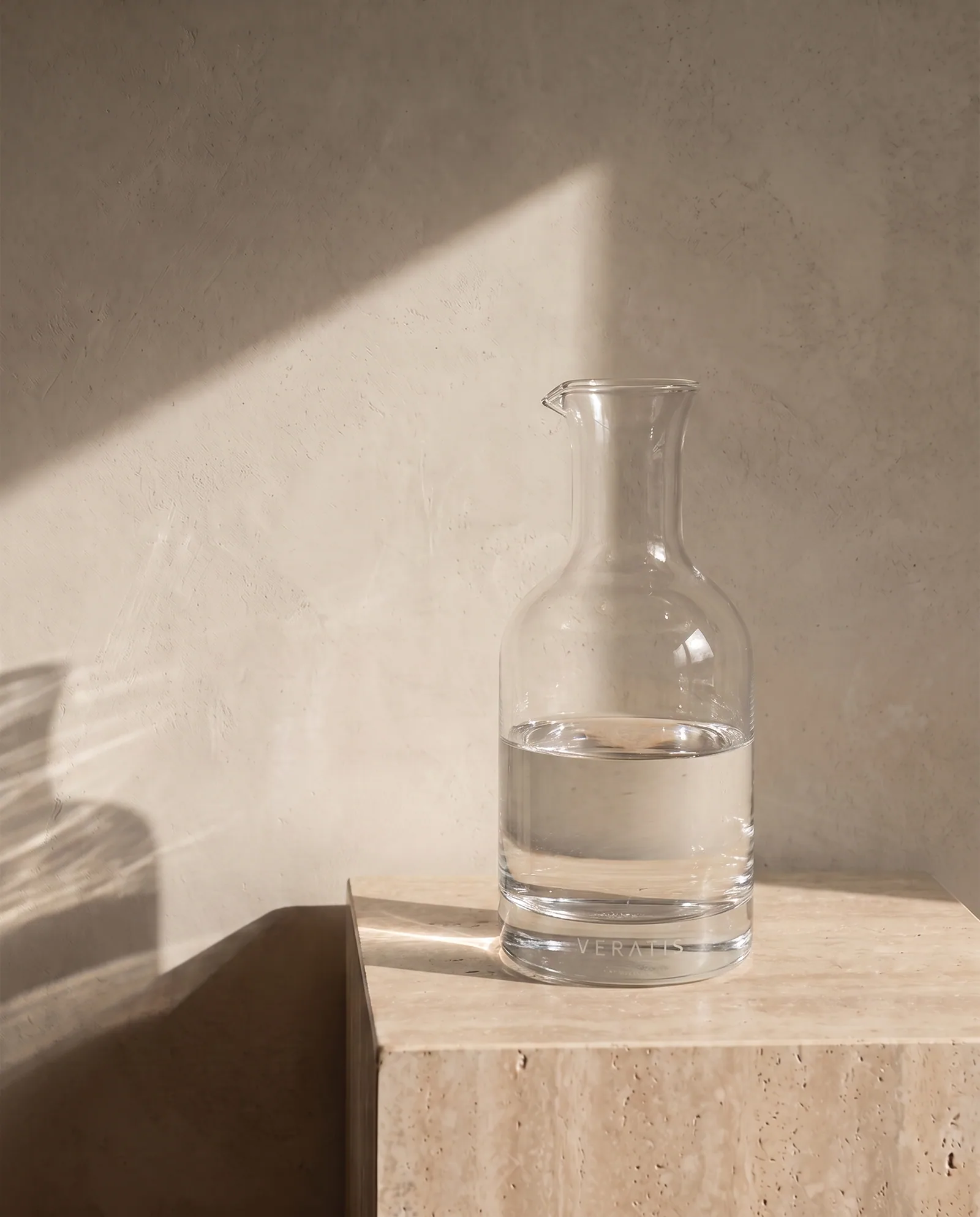
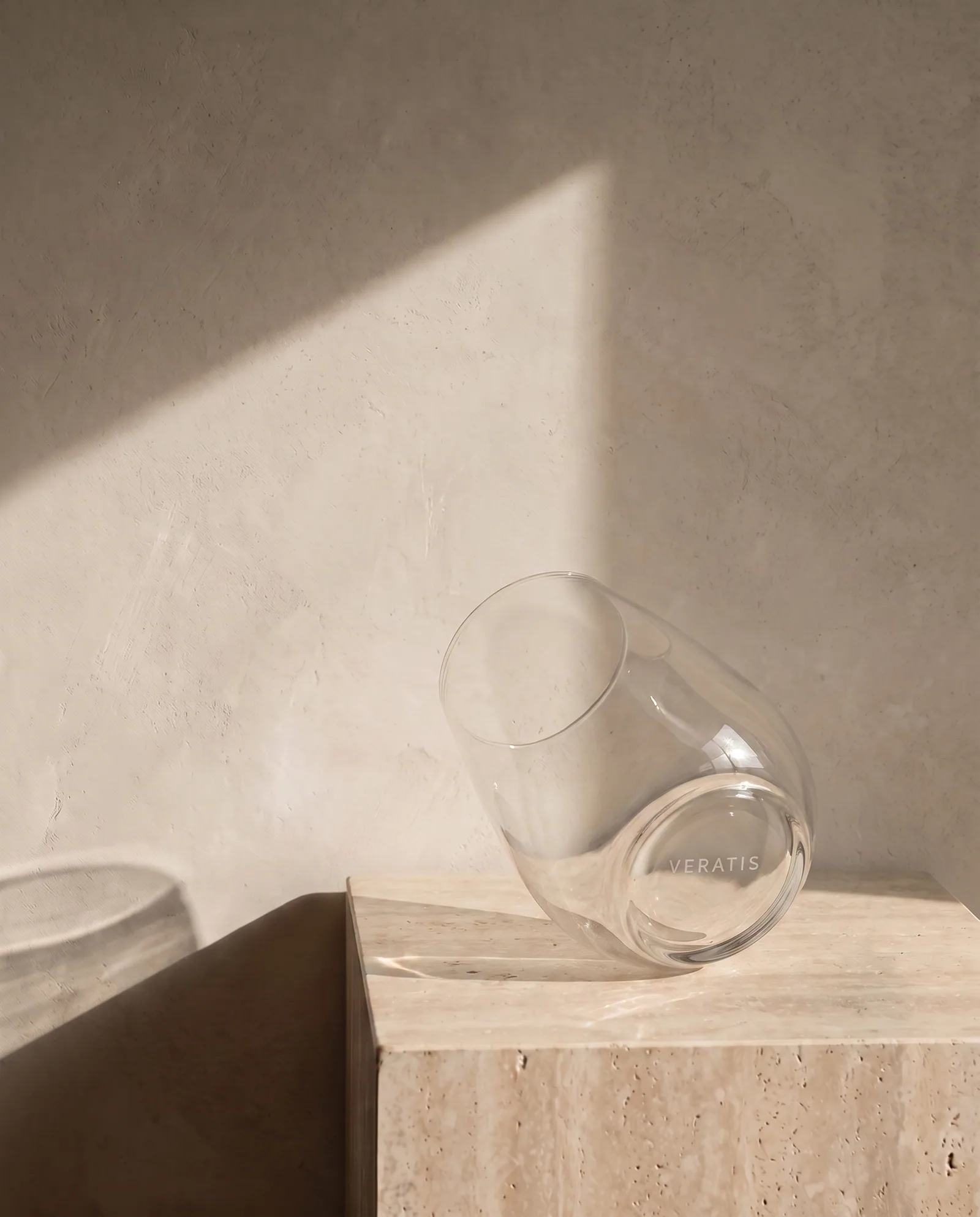
Hand-blown soda-lime glass. Wall thickness varies by a fraction between pieces; bubbles are inclusions, not flaws.
What to expect
- Height varies by up to 3 mm between pieces and wall thickness is not perfectly even.
- Small bubbles are inclusions from the blowing process. They are in the glass, not on it.
- The rim is fire-polished, so it is smooth but not perfectly level.
How it ages
Clear indefinitely if washed on a glass cycle. Dishwasher etching over years is caused by detergent and soft water, not by the glass.
Care
- Dishwasher safe on a glass cycle.
- Not heat-resistant — never pour boiling water into a cold glass.
- Not suitable for the freezer.
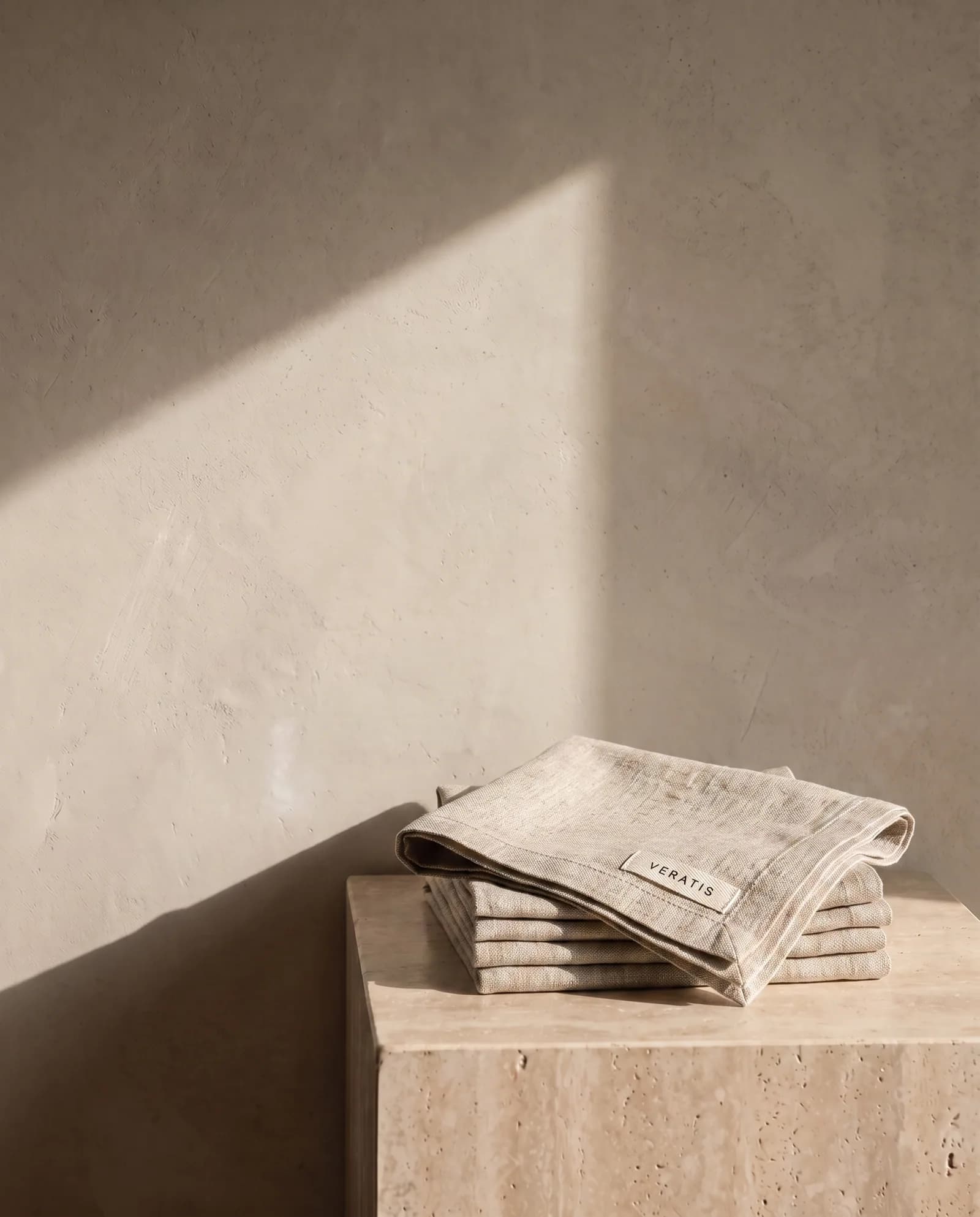
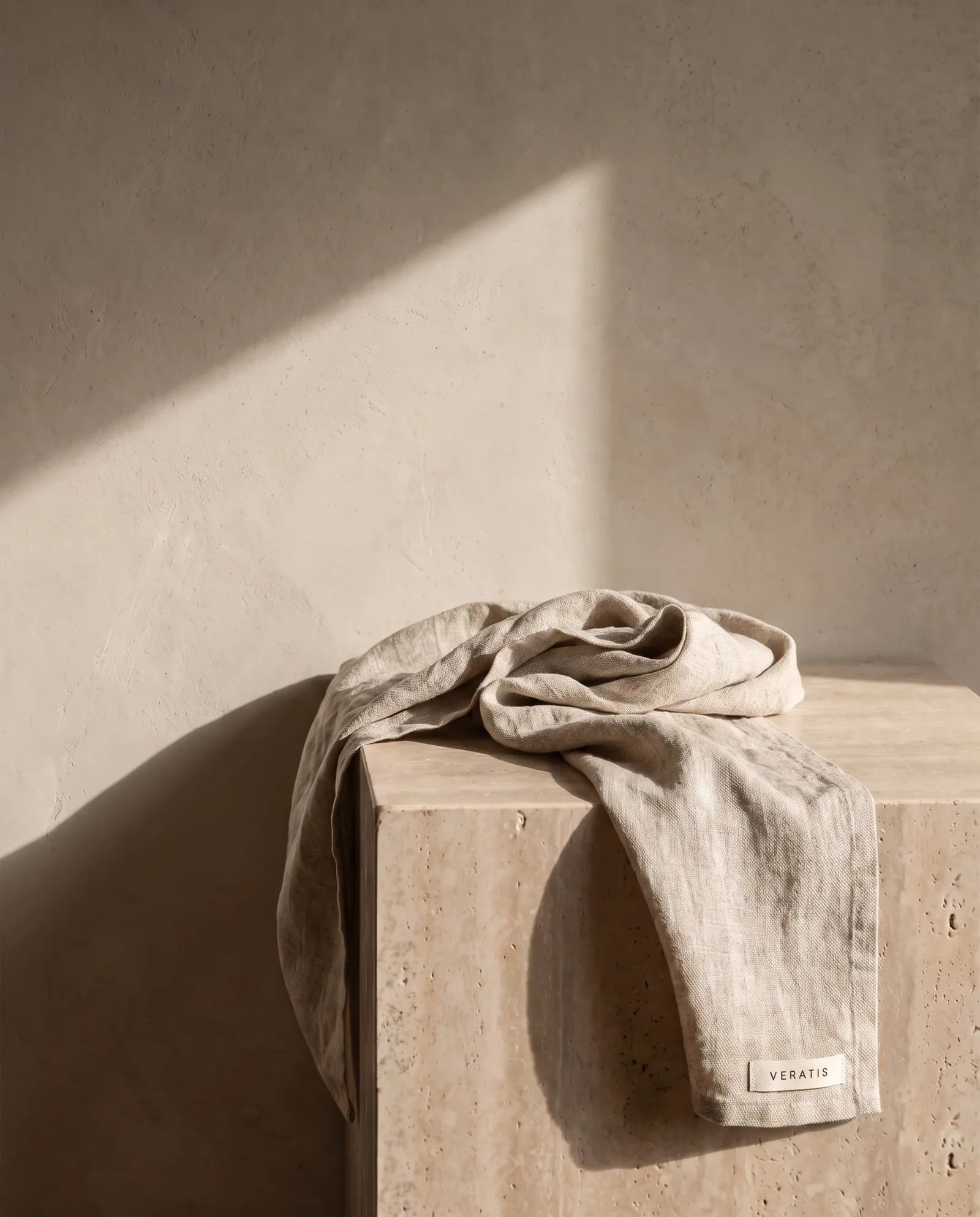
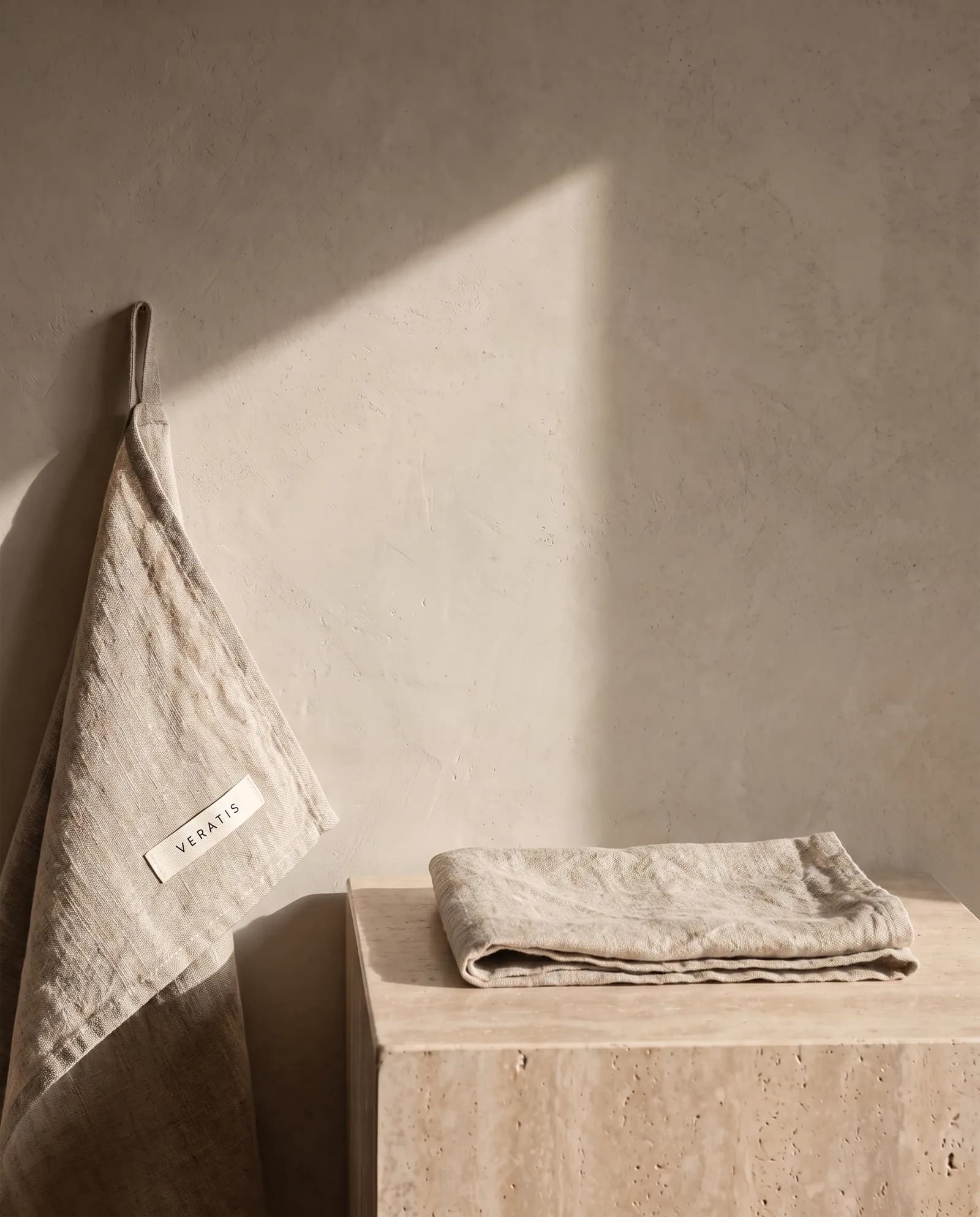
Linen
European flax, stonewashed before cutting so the finished piece will not shrink further in normal use.
What to expect
- It creases. Nothing is applied to stop it.
- Slubs — thicker threads running through the weave — are characteristic of flax, not faults.
- New linen is not very absorbent. Tea towels reach full absorbency after about three washes.
How it ages
Softens with every wash and keeps softening for years. Stonewashed before cutting, so expect no more than 1% further shrinkage.
Care
- Machine wash warm. Tumble dry low or line dry.
- Never use fabric softener — it coats the fibre and destroys absorbency.
- Not colourfast to bleach; chlorine marks flax permanently.
Brass
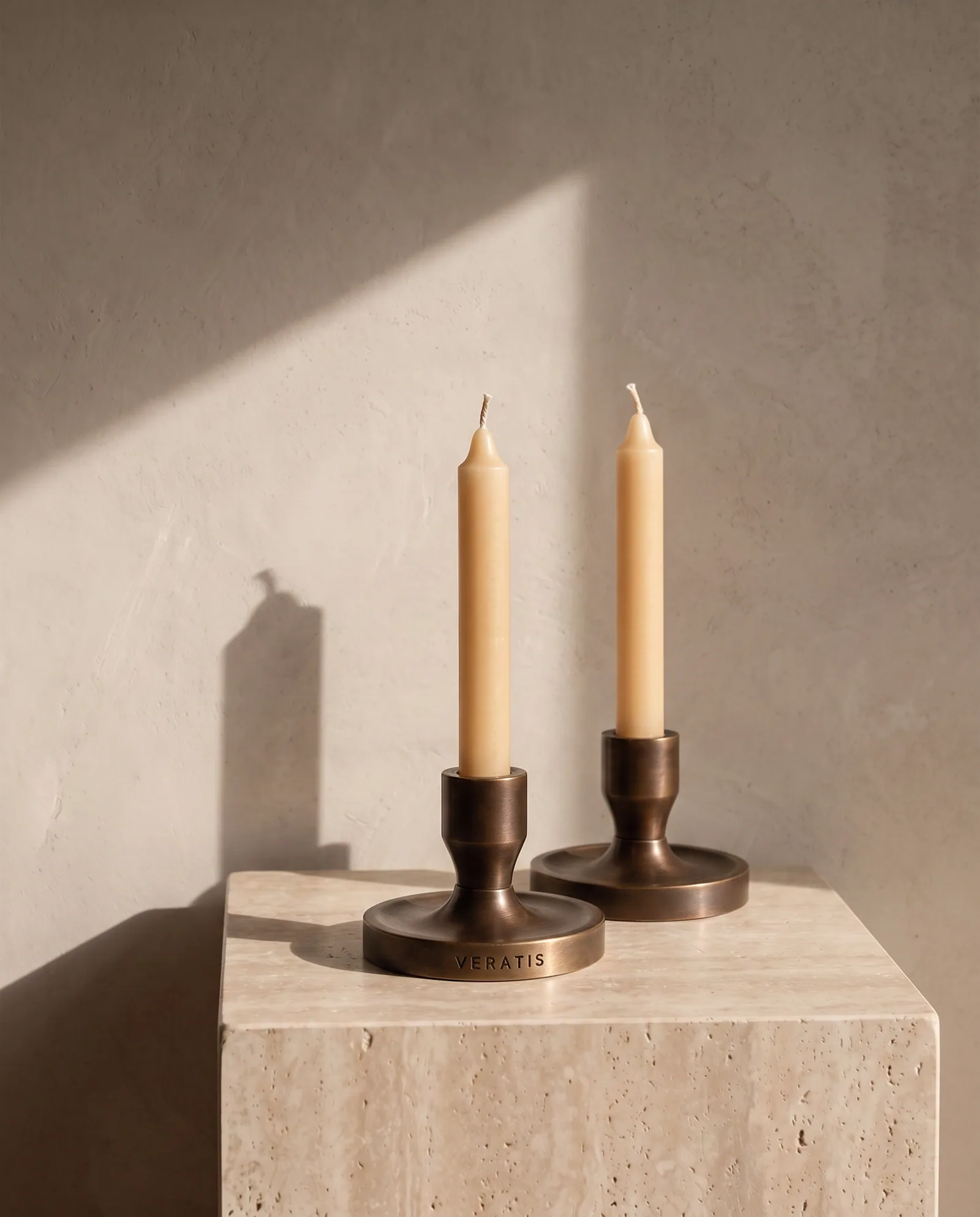
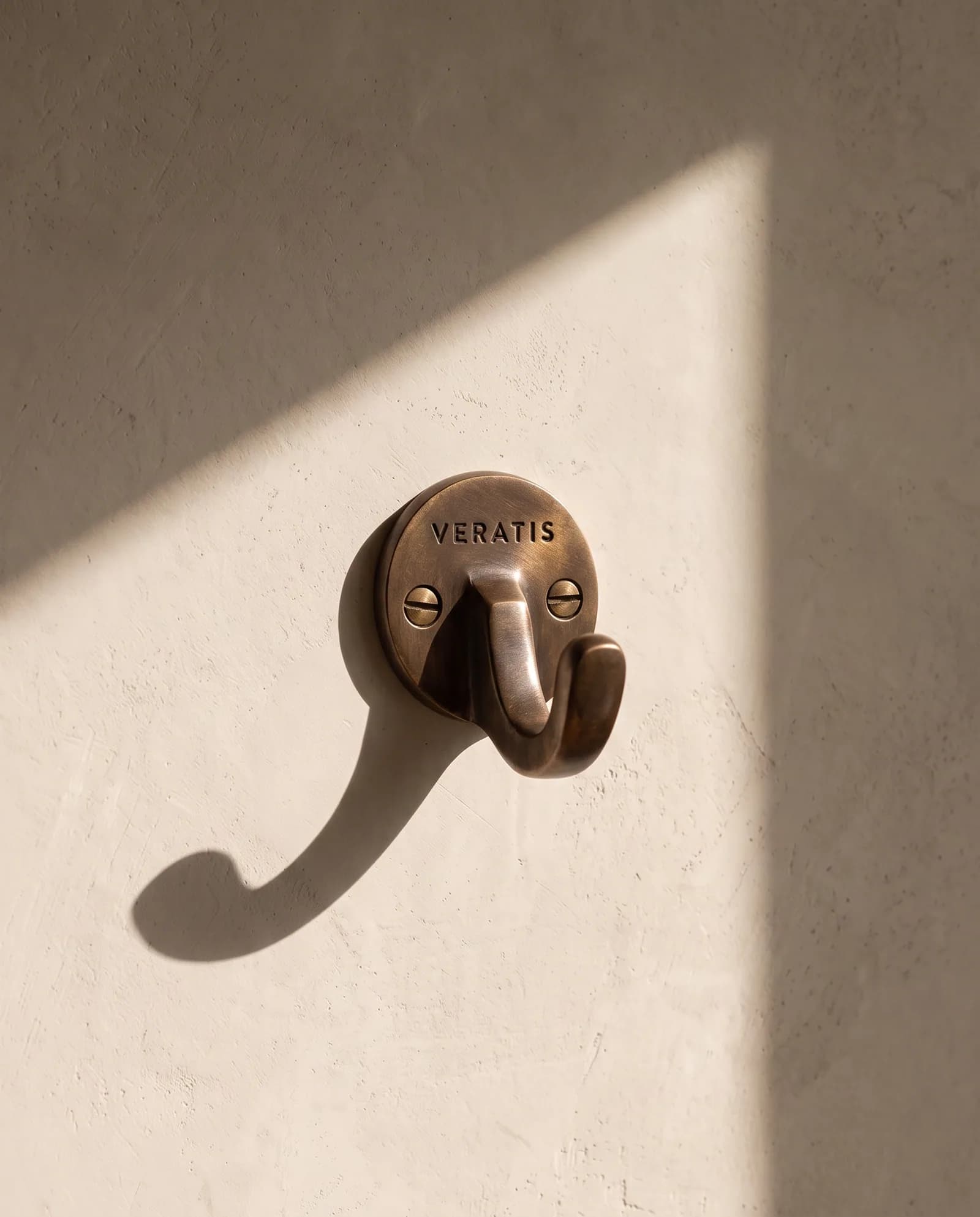
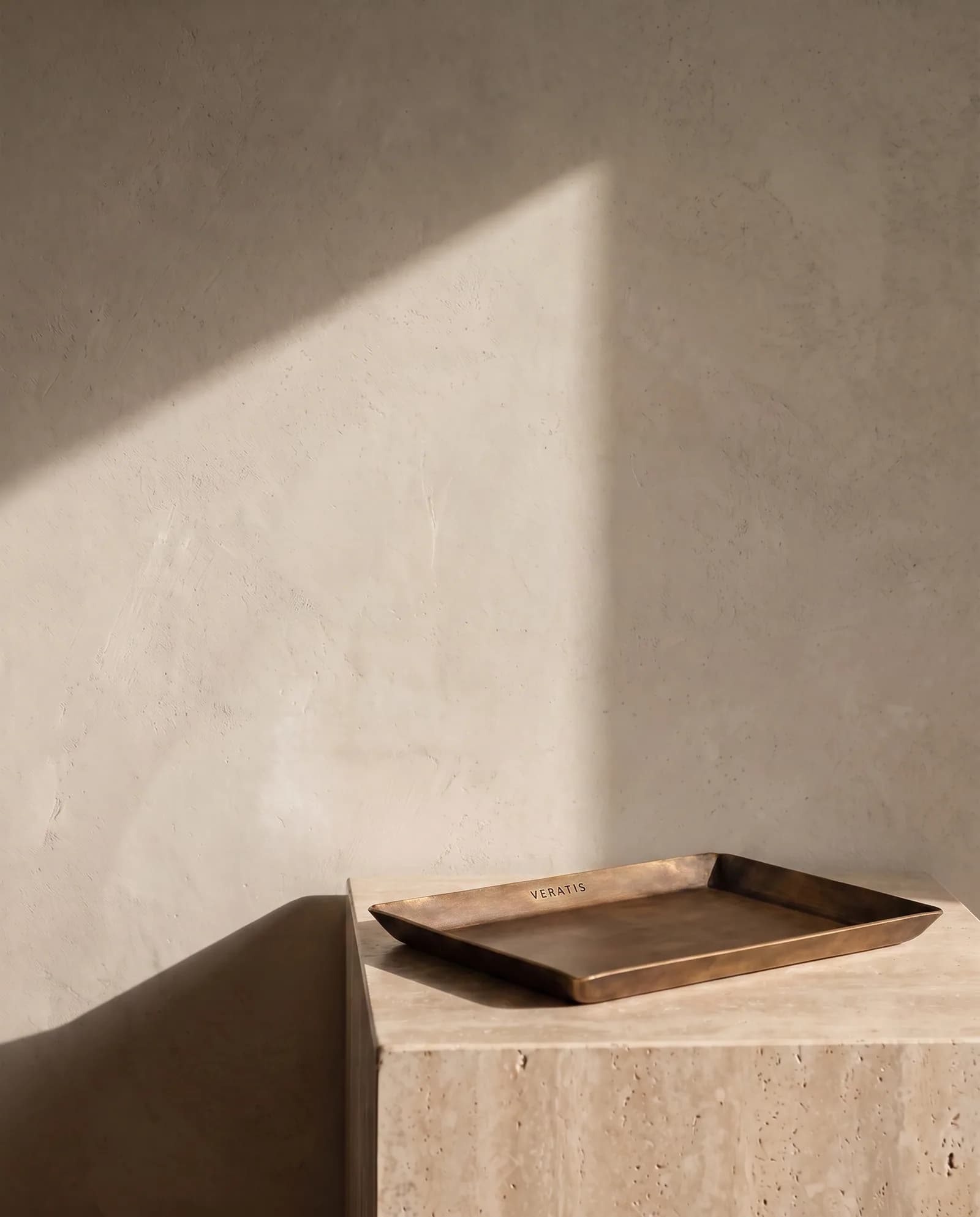
Solid CZ121 brass, unlacquered. It will darken and fingerprint. That is the material behaving correctly.
What to expect
- It arrives bright and it will not stay bright.
- Fingerprints show, and darken into the surface over the first weeks.
- Patina develops unevenly — faster where the piece is handled, slower elsewhere.
How it ages
Darkens to a deep warm brown over months. This is the material behaving correctly and it is why the brass is unlacquered. Polish it back at any point if you prefer bright, but that becomes permanent maintenance.
Care
- Wipe with a dry cloth.
- Never dishwasher safe — a dishwasher stains brass permanently within one cycle.
- Not for bathroom or outdoor use; constant damp corrodes it.
Stone
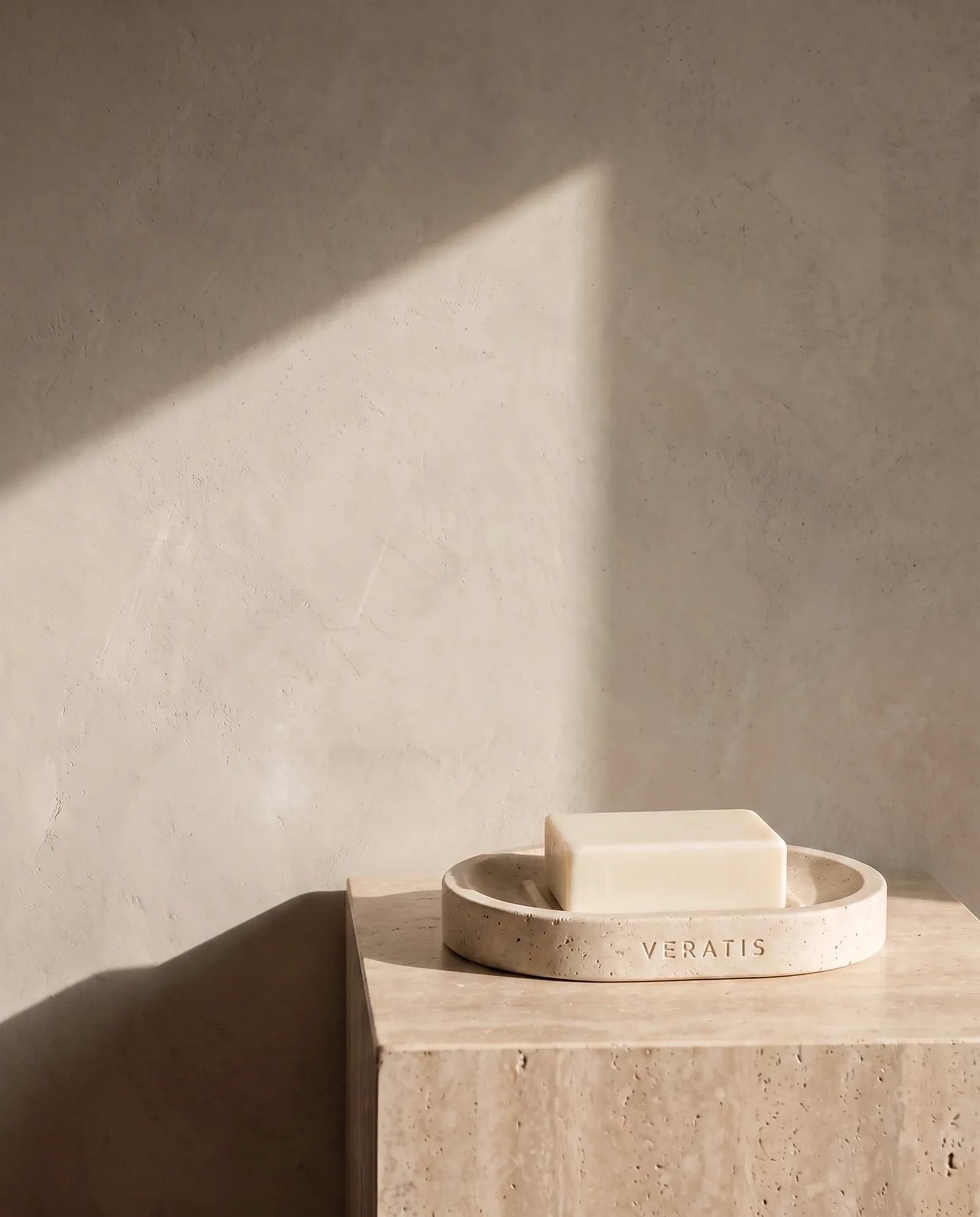
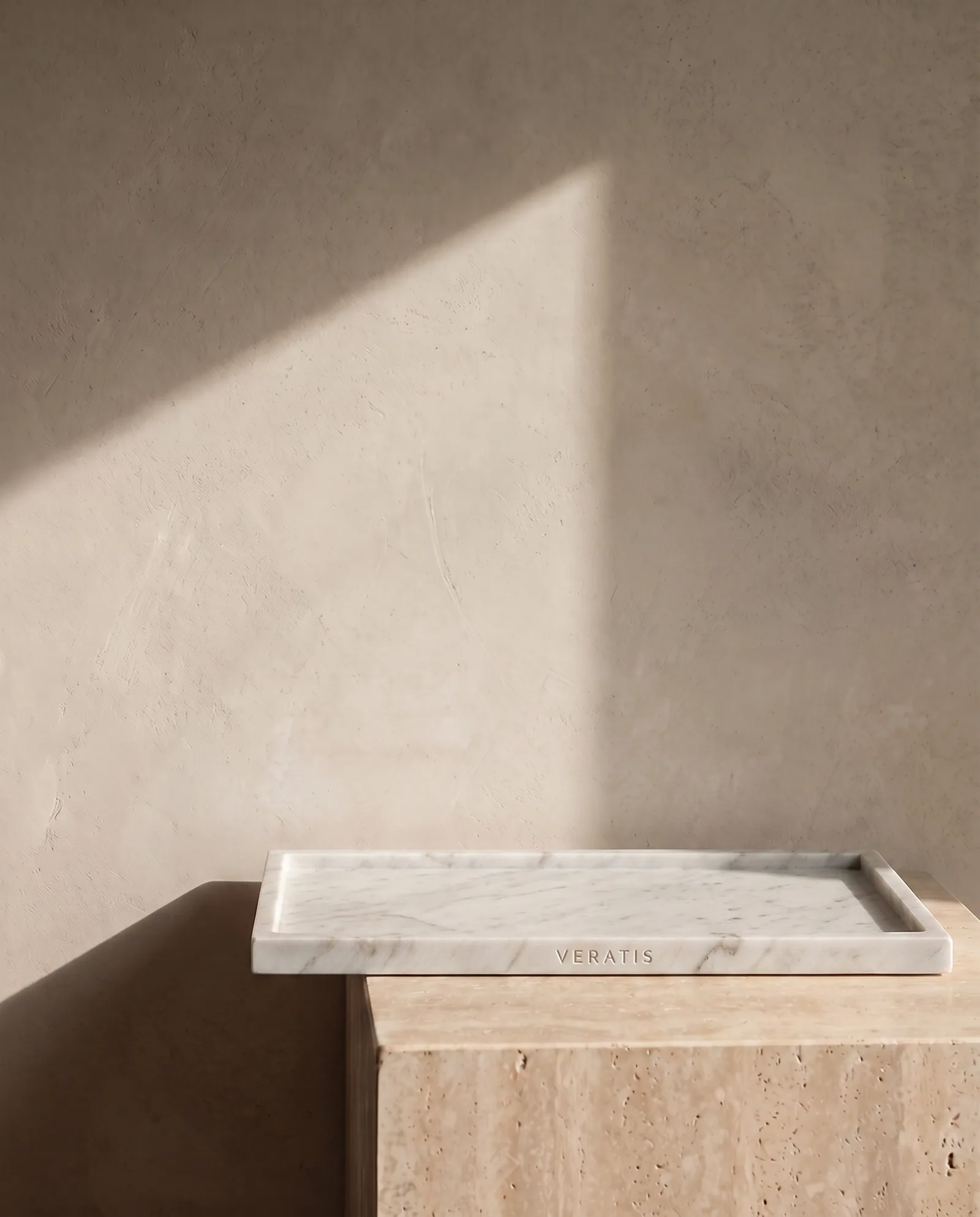
Marble and travertine, honed rather than polished. Porous by nature and sealed where it meets water.
What to expect
- Veining and colour vary piece to piece. Travertine also has natural pitting.
- Honed rather than polished, so the surface is matte and shows water marks until it dries.
How it ages
Stable if sealed and kept away from acid. Unsealed or acid-exposed stone etches, and etching is permanent.
Care
- Wipe with a damp cloth and dry.
- Reseal annually with a penetrating stone sealer.
- Never use acidic cleaners. Vinegar, citrus and wine all etch marble and travertine.
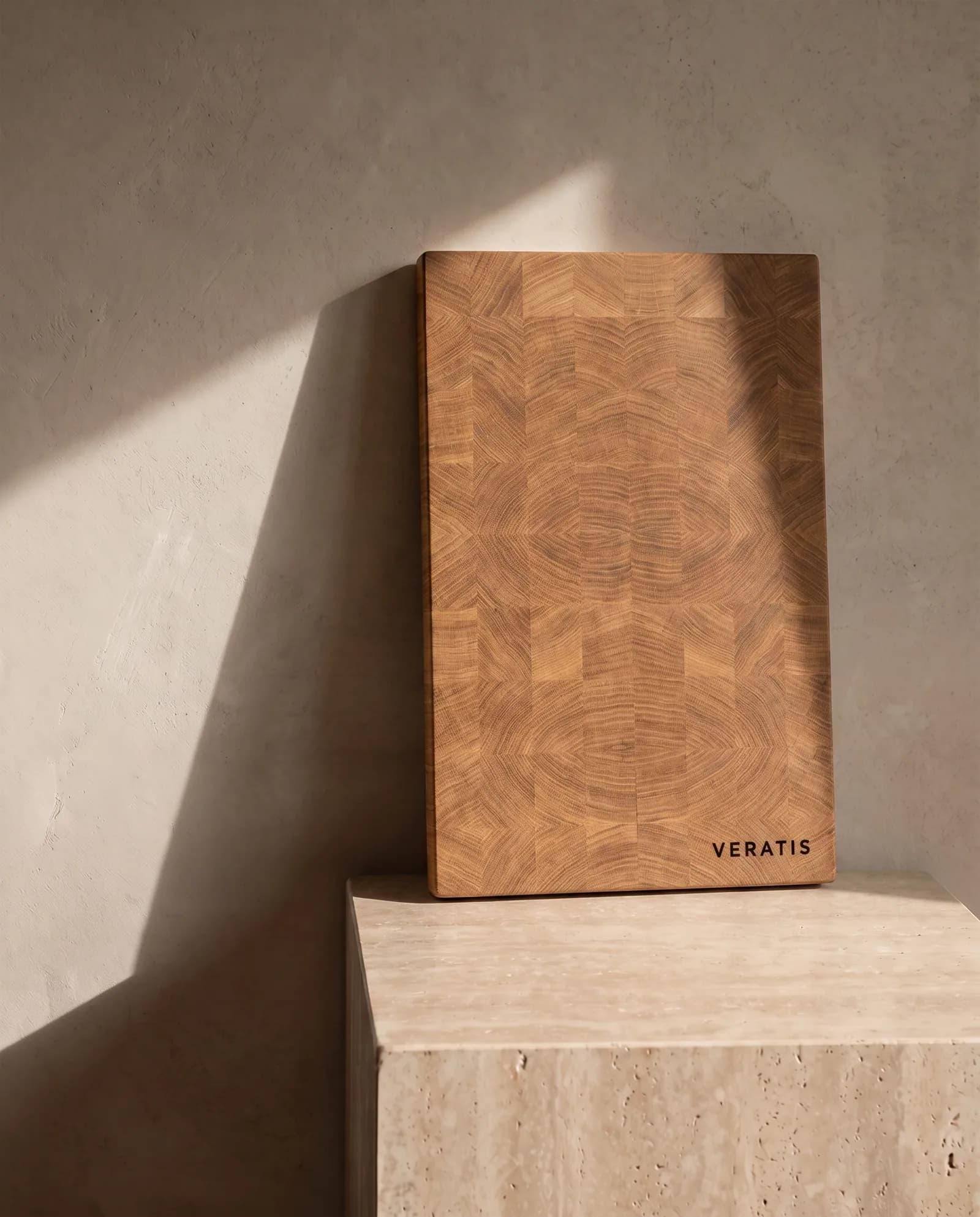
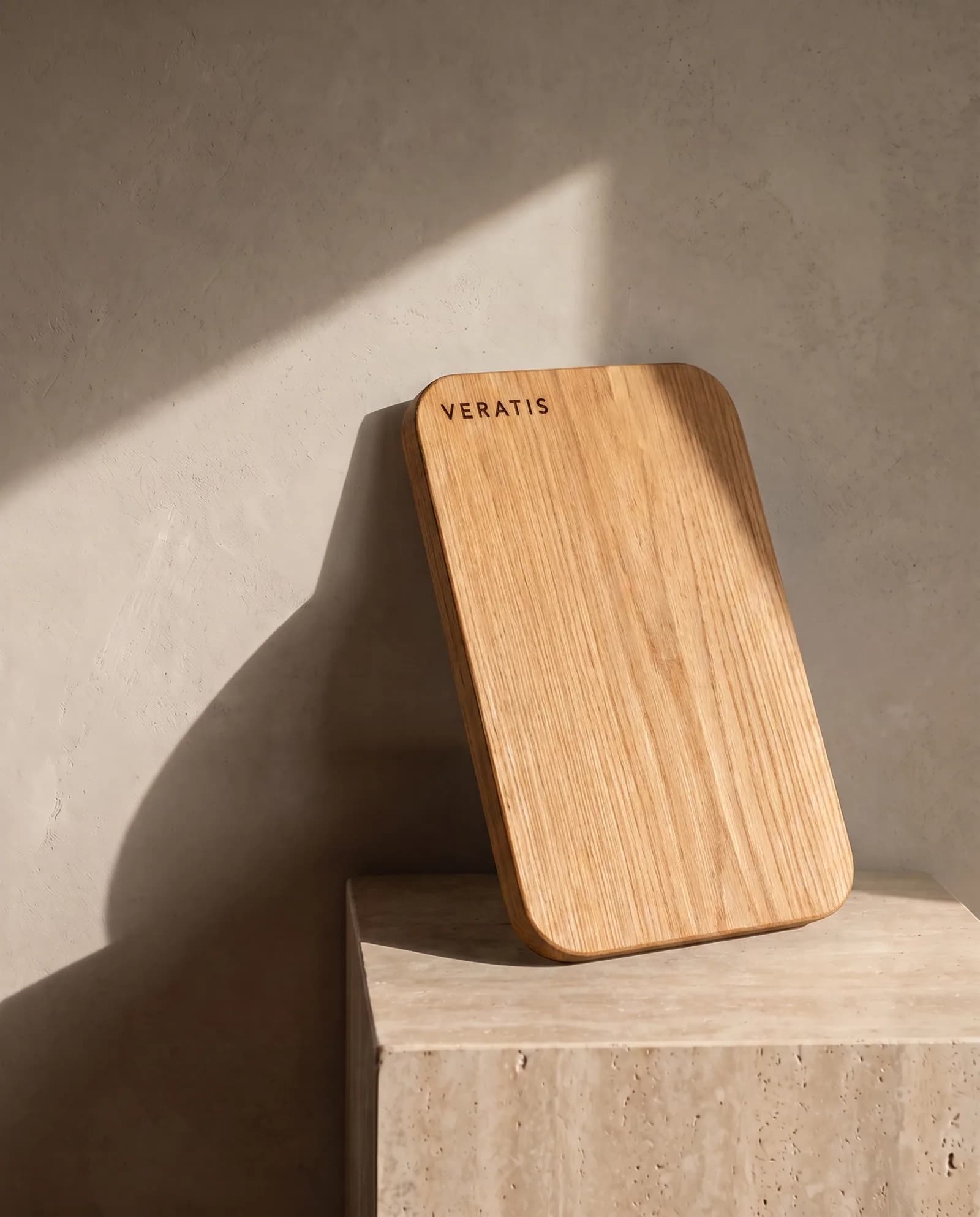
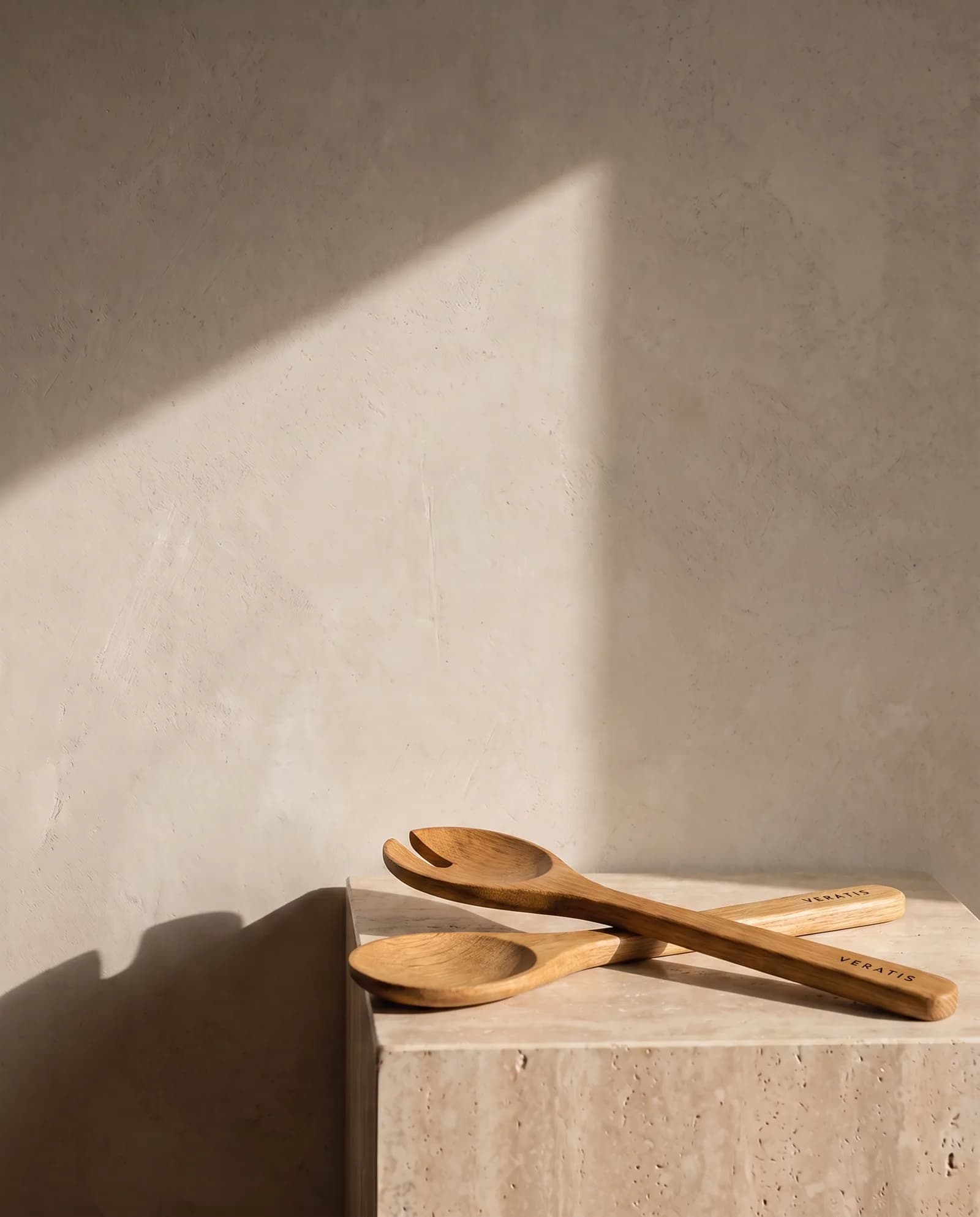
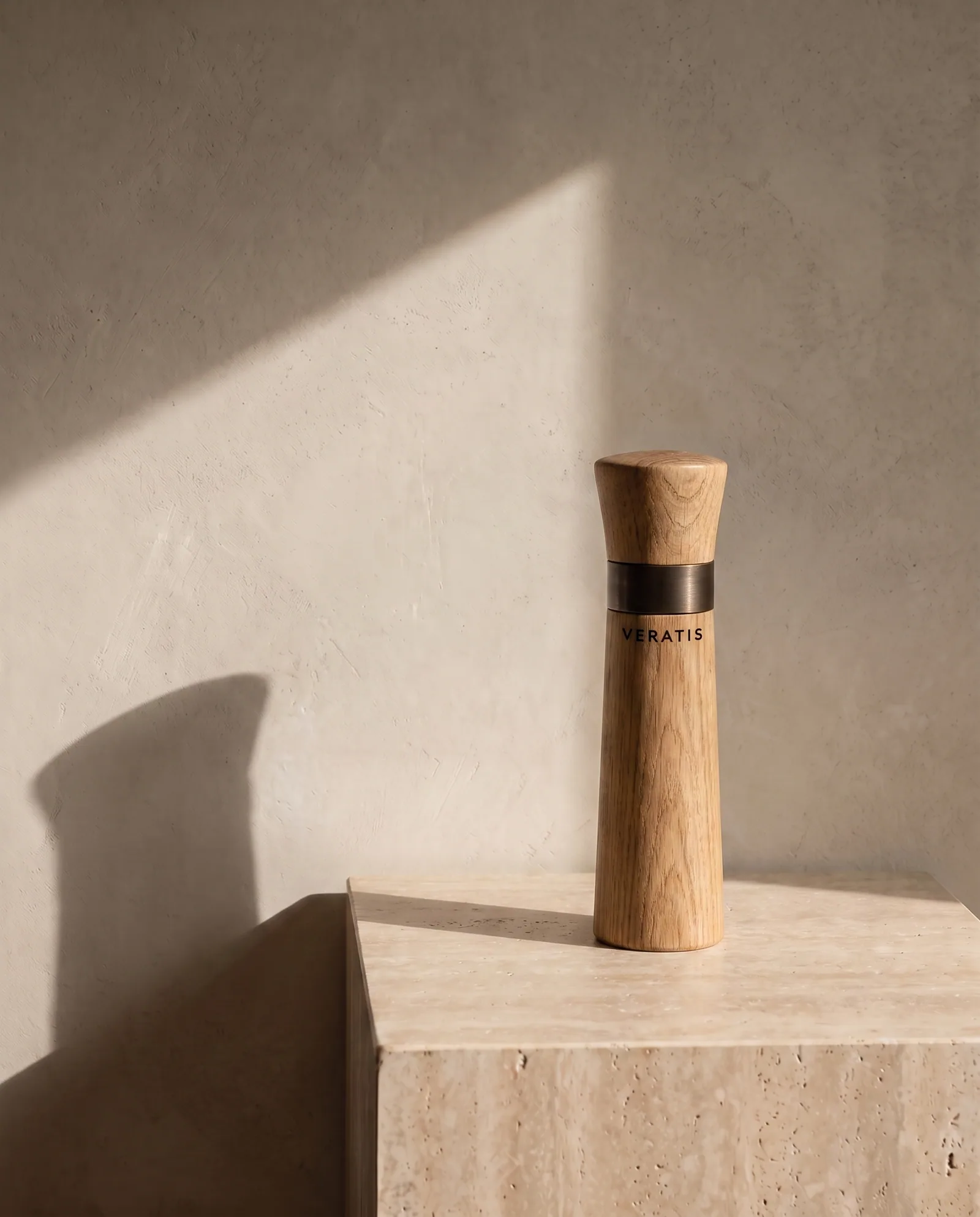
Oak
European white oak, finished with a food-safe hardwax oil that can be reapplied at home indefinitely.
What to expect
- Grain and colour vary between boards.
- End-grain boards close over knife marks; edge-grain boards show them.
- The surface looks pale and dry when it needs re-oiling. That is the indicator, not a fault.
How it ages
Darkens slightly and evenly with oiling. A hardwax-oiled board can be refinished at home indefinitely, which is why it is not lacquered.
Care
- Wash by hand and dry immediately, standing on edge.
- Never dishwasher safe. A dishwasher splits an end-grain board, often on the first cycle.
- Re-oil roughly every two months in regular use.
Wool
Lambswool and merino, woven in small runs. Warm without weight, and it recovers its shape after folding.
What to expect
- Light shedding for the first few weeks.
- Woven in small runs, so batches vary slightly in tone.
How it ages
Recovers its shape after folding and holds it for years. Wool is not moth-proof, and moths are drawn to worn wool rather than clean wool.
Care
- Dry clean, or hand wash cold with a wool detergent and dry flat.
- Never machine wash or tumble dry — it felts and shrinks irreversibly.
- Store clean and sealed over the summer.
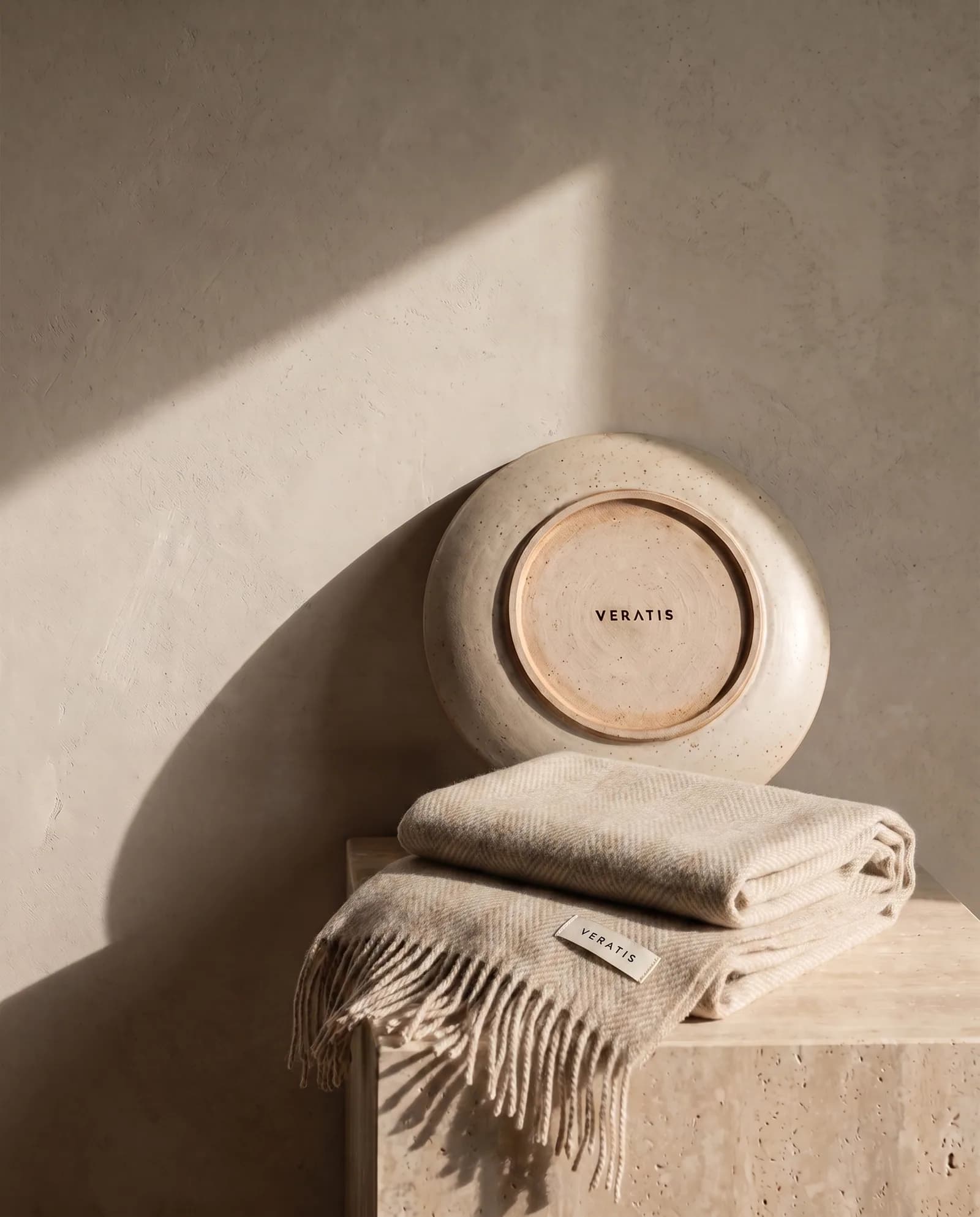
Still not sure whether something suits you?
Ask us before you order. We would rather answer a question than process a return. support@veratishome.com